A paint job that’s worth millions: What are the most famous aircraft liveries ever?


Most people think an airline’s livery is just branding. It’s not.
A livery is:
a trust signal
a national identity
and sometimes… a technical and financial decision with real operational consequences
Here are some of the most famous, and bizarre, aircraft liveries in aviation history, and the stories behind them.
The one every Australian knows
Qantas – The Flying Kangaroo
You’ve seen it your whole life, but it’s evolved more than most realise.
Fast facts you can steal:
The kangaroo first appeared in 1944, inspired by the one-penny coin
The tail design has been refreshed 5+ times
The latest modern version (2016) is simplified for weight, repaint time, and brand clarity

But here’s where it gets more interesting:
Qantas didn’t just standardise its look, it experimented with it.
Its Indigenous livery series on the 747 fleet (like Nalanji Dreaming and Wunala Dreaming) became some of the most recognisable aircraft in the world. These weren’t just marketing exercises:
They required specialised paint processes
Increased application time and cost
And demanded tighter maintenance standards to preserve the artwork
In other words, they traded operational efficiency for cultural impact, and it worked.

The origin of Jetstar’s orange: Design by accident or intuition?
Jetstar’s now-iconic orange wasn’t born in a polished branding studio moment, at least not according to early project team recollections (or aviation folklore).
One version of events claims the metallic grey was inspired by a Mercedes owned by a senior marketing executive on the set-up team at the time, while the striking orange was selected from the inside lid of a local Chinese takeaway container.
Unfortunately, there’s no formal record confirming this, but the story has persisted in industry circles because it feels oddly plausible: a reminder that even major airline identities can emerge from a mix of corporate intent, personal influence, and unexpected real-world reference points.
Hard reality fact: A full aircraft paint job can weigh 250–500 kg. That’s fuel burn, every single flight, for years.

The airline that treated planes like art: Braniff International Airways – “The Jellybean Fleet”
In the 1960s, Braniff did something no one else dared.
painted aircraft:
bright orange
deep purple
turquoise
even solid lime green
Why it mattered:
Instant recognition on crowded ramps
One of the earliest examples of visual brand dominance in aviation
Bizarre fact: Passengers reportedly chose flights based on colour preference.

The livery that became a celebrity: Southwest Airlines – “Shamu”
One aircraft. Massive impact.
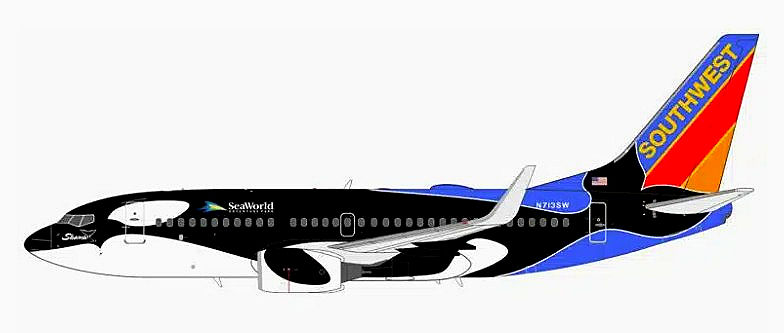
Southwest painted a Boeing 737 as a killer whale in partnership with SeaWorld.
What followed:
One of the most photographed aircraft in the US
Proved that special liveries, equate to free, scalable marketing
Now every airline does it, from sports teams, band promotions to movie tie-ins.
The boldest modern identity: Air New Zealand – The all-black fleet
Simple. Aggressive. Instantly recognisable.
Why it works:
Aligns with the 'All Blacks' national identity
Breaks the “white aircraft” convention
Signals premium positioning with minimal design
Operational downside:
Black paint absorbs more heat
Typically, heavier coatings required
Can increase thermal cycling stress on surfaces
They accept the penalty, for brand impact.

The weird stuff airlines don’t talk about
This is where liveries stop being cosmetic—and start being operational.
1. Paint = fuel burn
Heavier paint directly increases fuel consumption, and over a fleet lifecycle, that’s millions in cost.
2. White aircraft liveries aren’t boring, they’re strategic
Most airlines default to white because it:
reflects heat
reduces structural stress
makes defects (cracks, leaks) easier to spot
protects residual value for leasing
3. Paint can hide (or reveal) problems
Design choices can:
mask oil streaking
reduce visible wear
extend time between repaints
4. Repainting isn’t trivial
A widebody repaint can:
cost $200,000+
take days out of service
require full stripping, inspection, and reapplication
5. Modern materials changed the game
Composite aircraft, like the Boeing 787, introduced new challenges. Recent years saw issues with paint adhesion on composite structures, particularly around 787 wing surfaces where paint peeling was observed.
That’s not just cosmetic:
It affects surface protection
Triggers inspection and maintenance actions
And shows that even paint is now tied into material science and certification complexity
So why do aircraft liveries matter?
Because aircraft liveries sit at the intersection of:
engineering
finance
branding
and national identity
They’re one of the few decisions in aviation where: what looks good, can cost real money every hour it flies.
Final thought
Next time you see an aircraft on the ramp, don’t just look at the logo.
Pay attention to:
colour choices
simplicity vs complexity
how clean (or worn) it looks
and what that says about the airline behind it
Because that paint job; it’s not just decoration.
It’s also part of the strategy.
Stay Safe,
Craig.

Comments